


Balayage vs Highlights: Which Color Technique Is Right?
Oct 20
9 min read
Table of Contents
Balayage vs Highlights: How the Two Techniques Actually Differ
How Balayage Is Applied
How Foil Highlights Are Applied
The Difference Between Balayage and Highlights in the Final Result
Natural Look, Brightness, and Color Placement
Balayage vs Highlights Cost: What Drives the Price
Balayage Maintenance and Touch-Up Schedule
Hair Type, Starting Color, and Damage Risk
What to Ask Your Stylist Before Getting Balayage or Highlights
Which One Is Right for You?
Frequently Asked Questions
Last Updated: October 21, 2026
Balayage vs Highlights: How the Two Techniques Actually Differ
Choosing between balayage and highlights comes down to one structural difference: balayage is hand-painted freehand color, while highlights are woven into foils. That distinction drives everything else, from grow-out to maintenance.
Here is the short version of how they differ:
Feature | Balayage | Foil Highlights |
Application | Hand-painted, freehand | Woven into foils |
Root appearance | Soft, diffused grow-out | Defined root line |
Brightness | Gradual, sun-kissed | Higher, more uniform lift |
Maintenance | Lower, longer touch-up window | Higher, more frequent touch-ups |
Best for | Lived-in dimension, low upkeep | Maximum brightness, precise placement |
How Balayage Is Applied
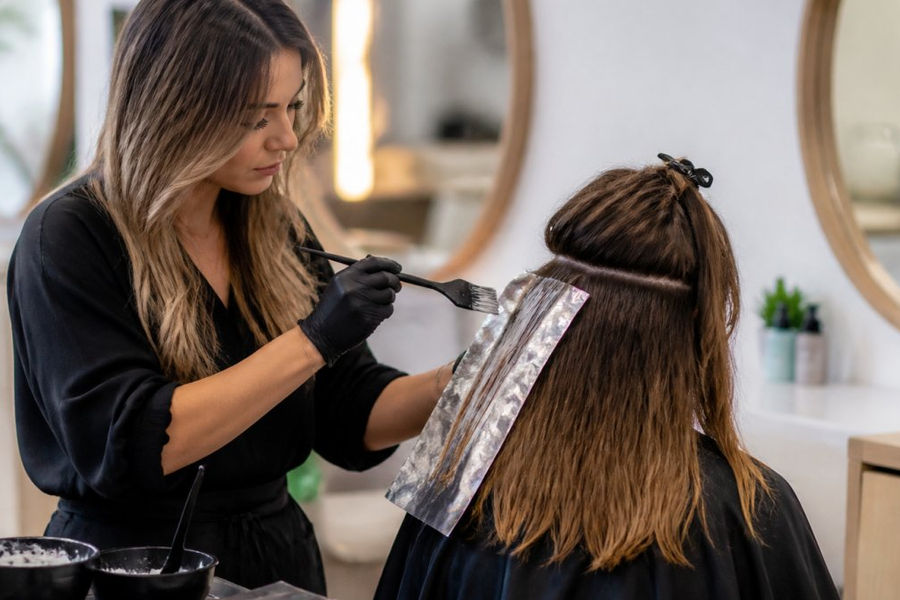
Balayage starts with sectioning, then painting lightener in sweeping strokes that taper away from the root. The colorist controls saturation by hand, leaving the base untouched near the scalp so grow-out stays soft. Placement is customized to the haircut, which is why balayage reads as natural rather than striped. A toner and gloss usually finish the service.
How Foil Highlights Are Applied
Foil highlights begin with a woven slice of hair laid on foil and saturated from a consistent starting point. Because the foil traps heat and keeps lightener wet, lift is brighter and more even than freehand work. Full foil, partial foil, and babylights all follow this method; the difference is section fineness and how close to the root color starts.
The Difference Between Balayage and Highlights in the Final Result
The difference between balayage and highlights shows up most in the root area and blend. Balayage produces a seamless blend with a softer root shadow, so regrowth looks intentional.
Neither is better in the abstract. If your goal is a bold, high-contrast blonde, foils get you there faster. If you want dimensional color that forgives a missed appointment, balayage wins.
Pro Tip Ask your colorist whether a hybrid service fits your goal. A balayage perimeter with foil highlights through the crown gives soft grow-out with brightness at the face.
Natural Look, Brightness, and Color Placement
Color placement decides whether a result reads as natural or high-impact. Balayage concentrates brightness at the mid-lengths and ends with freehand face-framing pieces, mimicking how the sun lightens hair. Foil highlights place brightness more evenly through the interior, producing uniform dimension and stronger contrast.
For a soft, sun-kissed transition, freehand placement is hard to beat. For maximum brightness and precise contrast, foils do the heavier lifting.
Balayage vs Highlights Cost: What Drives the Price
Balayage vs highlights cost is not a flat rate, it is a function of time, product, and technique. Most salons price by the hour or service tier, and the two techniques consume time very differently.
What drives balayage pricing:
Hand-painting time. Freehand application is slower per section than foiling because the colorist controls saturation stroke by stroke. A full balayage on long, dense hair can be a time-consuming application before processing.
Lightener volume. Balayage often uses more product per section to build the gradient, and the colorist may mix multiple bowls to keep saturation consistent.
Toner and gloss. Most balayage services finish with a toner or gloss, which adds time and product. Ask whether it is bundled into the quoted price or billed separately.
What drives foil highlight pricing:
Foil count. Partial foils (typically the top and sides) cost less than full foils because fewer sections are woven. The number of foils is the single biggest lever on price.
Section size. Babylights use very fine weaves and take longer to place than chunky highlights, so a babylight service can price above a standard foil even though the visual effect is subtler.
Root-to-tip versus root touch-up. A full foil refresh that re-lights the whole strand costs more than a root touch-up that only addresses regrowth.
The variables that move either price up:
Hair length and density. Longer, thicker hair means more sections, more product, and more time.
Starting color. Going from a dark base to a bright blonde requires more lift and possibly multiple sessions. Lifting several levels in one visit is the most common reason a quote lands at the high end.
Corrective color. Previous box dye, uneven lift, or banding has to be neutralized before either technique can deliver a clean result. Corrective work is priced separately because it takes multiple steps and often more than one appointment.
How to budget without a flat number:
Because pricing varies by market, salon tier, and hair, request a consultation quote before booking. A consultation lets the colorist assess length, density, starting color, and history, then quote a range rather than a guess. Ask three questions:
Is the toner or gloss included, or billed separately?
Is the quote for one session, or will my goal realistically take two?
Does the price change if I add face-framing or a root shadow?
A partial foil often prices below a full balayage on the same length, while a full foil with babylights can price at or above balayage because of placement time.
Pro Tip Ask for the quote as a range with the assumptions spelled out (length, density, whether corrective work is needed). A range with assumptions is more useful than a single number that changes at the chair.
If budget is the deciding factor, choose the technique that needs fewer visits per year rather than the one with the lower single-service price. A service that costs less per visit but requires twice the frequency can cost more over twelve months.
Balayage Maintenance and Touch-Up Schedule
Balayage maintenance and touch-up schedule is the strongest argument for the technique if low upkeep matters. A hand-painted grow-out blends gradually, so many clients stretch touch-ups to several months. Foil highlights show a defined root line sooner, pulling most clients back more often for a root touch-up or gloss.
A practical upkeep rhythm looks like this:
Balayage: gloss every 6-8 weeks to refresh tone, full touch-up every 3-4 months depending on grow-out tolerance
Foil highlights: root touch-up every 4-6 weeks, full foil refresh every 8-12 weeks
Both: a toner or gloss between services keeps blonde from turning brassy
If you travel or work long hours, balayage is the more forgiving commitment. If you love a crisp, bright root, budget for the more frequent salon appointment that foils require.
Watch Out Skipping toner between appointments is the fastest way to watch a beautiful blonde turn dull or brassy. Book the gloss even when you skip the full color service.
Hair Type, Starting Color, and Damage Risk
Hair type, starting color, and condition change which technique suits you, and whether either can safely deliver your goal in one session.
How hair type shifts the recommendation:
Fine hair lifts quickly and can look over-processed with heavy foiling. Babylights or a light balayage usually serve fine hair better because placement is sparser and lift is more controlled. Fine hair also shows a defined root line faster, which can make foil maintenance feel relentless.
Medium hair is the most forgiving and takes either technique well; the decision comes down to desired look and maintenance tolerance.
Coarse or resistant hair needs more lift, and foils handle that more predictably because the enclosed environment keeps the lightener active and evenly saturated. Freehand balayage on resistant hair can lift unevenly if the colorist does not adjust saturation and processing time.
Why starting color matters more than technique:
Starting color determines how many levels of lift are required, and lift is where damage risk lives.
Dark bases going several levels lighter carry the highest damage risk with either technique. Building brightness across two appointments protects the integrity of the hair far better than forcing it in one session.
Previously lightened hair is the most common source of trouble. Lightener applied over already-lifted sections causes overlapping, the leading cause of breakage and banding. A colorist needs a clear history of every chemical service, including box dye, before mixing.
Warm or brassy starting tones may need to be neutralized before or during the lightening step. Skipping that step is why some blondes come out orange rather than soft.
The mechanisms behind damage, and how to reduce risk:
Lightener opens the cuticle and breaks down melanin; every minute on the hair trades lift for integrity. The safeguards are the same for both techniques:
Strand test. A small test section processed before the full service tells the colorist how your hair responds and how long the lightener needs. It is the single most useful risk-reduction step and standard practice for corrective or high-lift services.
Overlap control. The colorist should keep new lightener off previously lifted sections. This is easier with foils, where the section is isolated, and harder with freehand painting, which is why balayage on previously highlighted hair demands an experienced hand.
Processing checks. Visual checks during processing catch over-lift before it becomes breakage.
Corrective color: the realistic limits:
If your hair is already compromised from previous lightening, the responsible path is gradual.
A quick self-check before you book:
Have you colored your hair at home in the last year? If yes, say so, it changes the formulation.
Is your hair currently breaking, stretching, or feeling mushy when wet? Those are signs of compromised integrity that should be addressed before lightening.
How many levels of lift does your goal require? More than three or four usually means a multi-session plan.
The technique you choose matters, but the condition of your hair and the honesty of your consultation matter more.
What to Ask Your Stylist Before Getting Balayage or Highlights
What to ask your stylist before getting balayage or highlights determines whether you leave with the color you pictured. Bring photos, name the maintenance level you can live with, and ask how the grow-out will look in eight weeks. A good colorist will tell you when your goal is unrealistic for your starting point.
Use this checklist at your consultation:
Show two or three reference photos in different lighting
State your honest maintenance limit (how often will you actually come in?)
Ask how the root will look at the six-week mark
Key Takeaway The single most useful question is "what will this look like in two months?" It separates a colorist who is designing for grow-out from one who is only designing for the mirror on day one.
Which One Is Right for You?
Balayage suits you if you want a soft, natural-looking result with low-maintenance grow-out and gradual brightness.
At Mantra Hair Salon, our colorists use Aveda plant-based products and personalized consultations to match the technique to your hair, not the trend.
The hardest part of choosing between balayage and highlights is knowing which one your hair and routine can actually sustain. That is a conversation, not a menu choice.
Frequently Asked Questions
Do highlights or balayage look more natural?
Balayage usually reads as more natural because the color is hand-painted with a soft, diffused root and no hard lines of demarcation. Highlights applied in foils create more uniform, defined ribbons of brightness, which can look crisp and polished but more obviously salon-created. If your goal is a sun-kissed, lived-in blend that mimics how the sun naturally lightens hair, balayage tends to win. If you want maximum brightness and clean, even dimension, foils deliver that. Many colorists combine both, using balayage for the mid-lengths and ends and babylights near the face.
Is it cheaper to get balayage or highlights?
Neither is reliably cheaper, because balayage vs highlights cost depends on your colorist's hourly rate, the amount of lightener used, hair length and density, and how many foils or painted sections the service requires. Ask for a consultation with an itemized quote so you compare the same scope, and factor in toner and gloss, which are sometimes billed separately.
Which lasts longer, balayage or highlights?
Balayage generally holds its shape longer. Because the color is painted away from the root with a soft transition, regrowth appears as a gradual fade rather than a visible line, so many clients stretch touch-ups to every 12 to 16 weeks. Foil highlights create a more defined line at the root, which typically becomes noticeable around 6 to 8 weeks. In both cases, a toner or gloss refresh every 6 to 8 weeks keeps the tone from turning brassy, even when the placement itself does not need redoing.
Can you get balayage or highlights on dark hair?
Yes, both work on dark starting color, but the path to the result differs. Dark hair usually needs more lift, and a single lightener session may only reach a warm caramel or bronze tone before a toner cools it. Balayage on dark hair gives a softer, more gradual transition and forgives grow-out well. Foil highlights can achieve brighter, more contrast-driven dimension but often require multiple sessions to protect hair condition. A strand test and an honest conversation about how many appointments the goal will take are essential before booking.
Are highlights or balayage better for low-maintenance hair color?
Balayage is the lower-maintenance option for most people. The soft root shadow means regrowth blends instead of forming a hard line, so salon visits can be spaced further apart. Foil highlights need more frequent root touch-ups to stay looking intentional. That said, low-maintenance does not mean no maintenance: both techniques benefit from a toner refresh, a bond-building treatment, and color-safe shampoo at home. If your schedule is tight, ask your stylist to place the brightest pieces around your face and keep the root area soft.
What should I bring to a color consultation?
Bring photos of results you like and results you do not, ideally on hair similar to yours in texture and starting color. Mention your color history honestly, including box dye, henna, or previous lightening, because these change how your hair will lift. Note how much time you can spend in the salon and how often you are willing to return. Ask what the total will include: lightener, toner, gloss, and any bond treatment. A stylist who asks about your routine and hair health before quoting is doing the consultation correctly.
book your appointment today
Comments